
| Quick Answer The Strait of Hormuz is still mostly shut to normal shipping as of September 2026, six months into the crisis. If it fully reopens, oil prices should start to drop, but not straight away. Experts say it could take weeks or months to clear the backlog of ships, and prices may even wobble upward again before settling, because the world has to work through a build-up of trapped oil and re-fill emptied stockpiles. |
Strait of Hormuz Latest News: As the crisis continues, many are asking what happens to global oil supplies, petrol prices, and shipping routes if this critical waterway reopens. In this update, we break down the immediate economic impact, shipping delays, and what it means for your wallet.
You’ve probably seen “Strait of Hormuz” trending in the news and wondered what it actually means for you. Maybe you’ve noticed petrol prices creeping up, or heard someone on the radio saying the “world’s most important oil route” is blocked again. It sounds complicated, but it really isn’t. Let’s break it down in plain, everyday words.
What Is the Strait of Hormuz, and Why Should You Care?
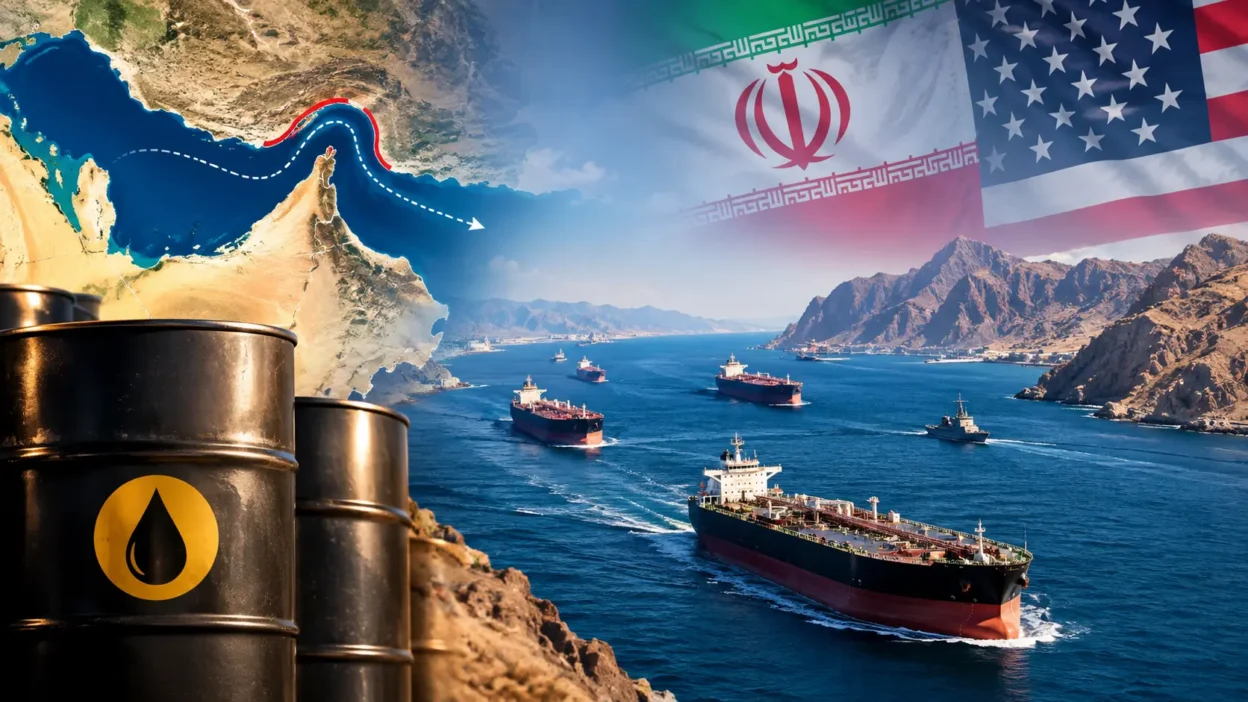
The Strait of Hormuz is a narrow strip of water between Iran and Oman. It is a mere 21 miles at its closest point, and yet it is one of the busiest arteries for oil in the world. Before the crisis began, some 20 million barrels of oil passed through it every day. That is a fifth of all the oil in the world, bound for places like China, India, Japan and South Korea, with a small proportion heading for the United States.
Think of it as a motorway junction used by half the country’s lorries. If it were closed down, shelves would be bare, not just in the immediate vicinity, but far away from where you are.
What’s Actually Happening Right Now
Here’s the situation. Iran’s kept the strait closed to shipping since late February 2026, after a war broke out between US-Israeli forces and Iranian ones. Ships have been attacked, mines have been laid, and it’s not safe enough for insurers to send them through. This has led to a jump in crude prices, with Brent at over $100 a barrel, up some 33% on the pre-war level.
Iran’s economy is in bad shape, with capital flows frozen, and its currency depreciating rapidly. Its military capabilities are limited, having suffered setbacks during its war with Iraq in the 1980s. And the regime is under pressure from hardliners who want to close the strait to shipping and make the country totally self-sufficient.
Meanwhile, the flow of oil through the strait has averaged just a few vessels a day as of mid-September, down from around 85 a day before the crisis. And despite a senior Iranian official recently saying that talks with Washington are ongoing, there are reports that Iran and its Gulf neighbours are discussing an alternative shipping route through Oman. In short, the strait is effectively closed, and no one except the most suicidal wants to risk sending a ship through it.
What Happens If the Strait Reopens?
This is the question everyone’s actually asking, so let’s answer it honestly.
Oil Prices Should Fall, But Slowly
Once the strait is genuinely safe, oil markets should start to return to normal, with prices starting to fall. But there is a sting. There will be a glut of “trapped” oil that needs to be accommodated somewhere. Analysts at JPMorgan have noted that an immediate flood of supply back into the market coupled with a lack of immediate need for reserves will lead to a price decline, but the drop is unlikely to be immediate or steep.
The Shipping Backlog Won’t Clear Overnight
Hundreds of ships have waited in vain for months, idle in the strait. Even when the coast is clear, vessels must line up, load, get insurance, and depart. The U.S. Chamber of Commerce has calculated that it will take weeks, maybe even months, to clear the backlog before supplies can return to normal.
Some Countries Feel Relief Faster Than Others
America is in relatively good shape here. The US is largely self-sufficient when it comes to oil, so the impact on the US from the Hormuz shutdown has been much smaller than in Asia or Europe. China, India, Japan, and South Korea are much more dependent on oil that transits through the strait, so they will likely see an even bigger benefit than US consumers from a reopening.
Inflation Could Ease, But Not Vanish
Research by the Dallas Federal Reserve modeled the impact of closure of Hormuz on the wider economy, finding that a prolonged closure could lower economic growth by more than a percentage point for the global economy, with price of oil rising sharply the longer it remains shut. The reopening of the strait would have the reverse effect, lessening the inflationary impact but other factors, such as costs of fertilizers to farming, could take longer to ease.
Could the Strait Close Again?
It is a fair concern. Even during the times that the US claimed that the waterway was “open”, independent shipping data showed something of a trickle, rather than a recovery, with the flow of goods. Until there is a lasting agreement between Iran and the US, or a viable alternative route through Oman opens for trade, another closure is highly possible. The markets factor that in, which is partly why prices have not dropped back to where they were before the crisis during periods of relative calm.
What This Means for Your Wallet in the USA
If you have been filling up your gas tank lately in the United States, you are probably aware that prices have risen. The upside to being in America is that we produce much of our own oil, so you are not nearly as badly off as some other countries. The bad news is that oil is an international product, and while things would definitely improve if the entire world were open, gas prices are not going to return to where they were before the conflict began anytime soon. Just wait and see what happens with more permanent re-opening news before you start expecting prices to drop.
The Bottom Line
The Strait of Hormuz continues to be one of the most influential variables of the global economy. A complete opening of the waterway would be positive for oil prices, inflation, and, by extension, your gas bill, but any improvement is likely to be gradual. Independent shipping data rather than government pronouncements should provide the best insight into the true situation.
Frequently Asked Questions
Is the Strait of Hormuz open or closed right now?
As of September 2026, it’s technically not fully closed, but real shipping traffic remains a small fraction of normal levels. Most tankers are avoiding it because of ongoing attacks and sky-high insurance costs.
Why does the Strait of Hormuz matter to the United States?
The US imports less oil through the strait than Asia or Europe does, but oil is priced globally. A closure anywhere pushes prices up everywhere, including at American petrol pumps.
Will oil prices drop immediately if the strait reopens?
Not immediately. Experts expect prices to ease over weeks or months as the shipping backlog clears and trapped oil supply re-enters the market.
What percentage of the world’s oil goes through the Strait of Hormuz?
Before the crisis, around 20% of the world’s oil and gas passed through the strait daily, roughly 20 million barrels a day.
Is there an alternative route if the Strait of Hormuz stays closed?
Saudi Arabia and the UAE have pipeline alternatives, but their combined capacity is far smaller than the strait’s normal flow, so they can only partly offset a closure.
Resources & Further Reading
- Al Jazeera – How much oil is going through Hormuz? Why data doesn’t match US claims – https://www.aljazeera.com/news/2026/9/3/how-much-oil-is-going-through-hormuz-how-data-doesnt-match-us-claims
- Al Jazeera – Oil prices rise as attacks dent hopes for Strait of Hormuz reopening – https://www.aljazeera.com/economy/2026/8/12/oil-prices-rise-as-attacks-dent-hopes-for-strait-of-hormuz-reopening
- Federal Reserve Bank of Dallas – What the closure of the Strait of Hormuz means for the global economy – https://www.dallasfed.org/research/economics/2026/0320
- U.S. Chamber of Commerce – Reopening of the Strait of Hormuz: Impact on Prices – https://www.uschamber.com/energy/reopening-of-the-strait-of-hormuz-impact-on-prices
- U.S. Energy Information Administration – The Strait of Hormuz is the world’s most important oil transit chokepoint – https://www.eia.gov/beta/international/analysis_includes/special_topics/World_Oil_Transit_Chokepoints