
| Quick Answer Global oil prices today are moving higher mainly because of conflict in the Middle East, disrupted supply from Saudi Arabia and Russia, and shrinking oil stockpiles worldwide. Brent crude is trading above $107 a barrel, up more than 55% compared to a year ago, as fighting and tanker attacks make it harder and riskier to move oil around the world. |
If you’ve filled up your car recently, you’ve probably noticed the price on the pump sign creeping up. You’re not imagining it. Oil is one of the most watched prices in the world, and right now, it’s on the move. Here’s what’s actually happening, explained in plain terms, without the jargon.
What Is the Price of Oil Right Now?
As of the mid-September 2026, Brent crude, the global benchmark for oil prices, is trading at approximately $107 to $108 a barrel. West Texas Intermediate (WTI) crude, the US benchmark, is at around $104 a barrel. To put that in perspective, oil was trading near $69 a barrel and was up more than 55% on a year-on-year basis, as of the same period last year. That kind of jump is a significant jump for any global commodity.
The climb in prices has not been linear either, with sharp spikes followed by brief declines, in line with volatile markets reacting to rapidly changing news cycles.
Why Are Oil Prices Rising?
There isn’t one single reason. It’s really a mix of problems piling up at the same time, all pointing in the same direction: less oil available, more risk in getting it to buyers.
Conflict in the Middle East
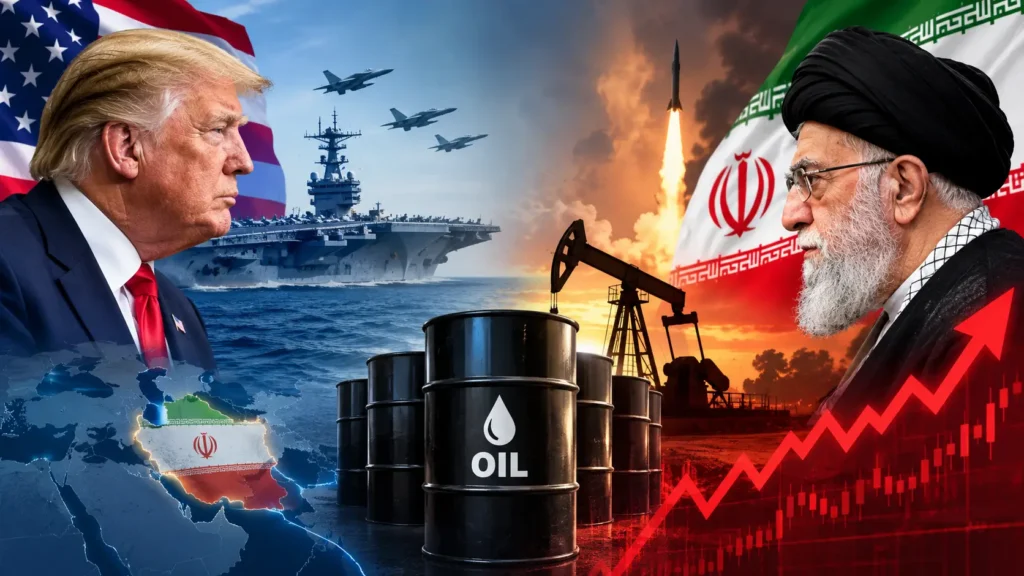
The biggest factor by far is the conflict between the United States and Iran, which has been going on for several months. Attacks on oil tankers and shipping routes in the strategic waterway of the Strait of Hormuz, through which a significant portion of the world’s oil flows, have made shipping companies wary and increased the cost of shipping oil. Some analysts at major banks have even warned that prices could climb past $120 a barrel if the situation worsens.
Saudi Arabia’s Pipeline Problems
A significant number of the world’s oil exporters is the Kingdom of Saudi Arabia, which has recently halted down the East-West pipeline due to attacks by the Houthi rebels on both maritime and Saudi infrastructure. As a result, the flow of oil products from the pipeline has been disrupted, with deliveries being forced to look elsewhere for their supplies.
Falling Oil Stockpiles
Oil doesn’t just get pumped and sold instantly — countries and companies keep reserves, a bit like a pantry. Right now, those reserves are shrinking fast around the world because more oil is being used than is being produced and shipped. When stockpiles fall, buyers get nervous, and nervous buyers push prices up.
Sanctions on Russian Oil
In addition to the current situation in the Middle East, the lawmakers in the US are working to establish new sanctions against countries that will continue to purchase Russian oil with the threat of imposing significant tariffs. Such actions add to the instability as Russia is among the leading oil producers in the world. The increase in uncertainty regarding the ability to buy Russian oil pushes the prices of the fuel up.
What Rising Oil Prices Mean for You
Here’s what affects the daily life and pocketbook. Crude oil typically makes up more than half of the price paid at the pump, meaning that increases in oil prices are swiftly passed on to petrol and diesel prices at filling stations. Further down the line, rising oil prices influence shipping costs, farm output, and manufacturing, all of which have an effect on the price of virtually everything from groceries to plane tickets.
A characteristic pattern in the oil price mechanism has been dubbed “rockets and feathers” in the industry: prices at the pump rise quickly when crude prices increase, but fall slowly when pressured down. As a result, motorists should not expect prices at filling stations to react quickly and sharply to reductions in the current price.
Will Oil Prices Keep Rising?
Nobody can say for certain, and any one telling you they know what will happen next is very vague, oil prices are very much tied to the progress in the Middle East conflict, how fast the Saudi pipeline is repaired, and if there will be any large scale accumulation of oil stockpiles by various countries. Recent data already shows a slight decrease after all, as the US oil stockpiles increased slightly, and it is important to remember that while things can go both ways, they often happen in just a handful of days.
Key Takeaways
- Brent crude is trading above $107 a barrel, up more than 55% from a year ago
- Middle East conflict and attacks on tankers are the single biggest driver right now
- Saudi pipeline outages and falling global stockpiles are adding extra pressure
- New sanctions targeting Russian oil buyers are adding further uncertainty
- Expect fuel and everyday prices to keep feeling the effect for some time yet
Frequently Asked Questions
Why are oil prices going up right now?
Oil prices are rising mainly because of conflict in the Middle East, tanker attacks near major shipping routes, supply problems in Saudi Arabia, and shrinking global oil stockpiles.
What is Brent crude, and why does it matter?
Brent crude is the main benchmark used to price oil traded internationally. It’s often used as a general guide for global oil prices, even for oil that isn’t Brent itself.
How does the oil price affect petrol prices?
Crude oil usually makes up over half of the cost of a gallon of petrol or diesel, so when oil prices rise, fuel prices at the pump tend to follow within days or weeks.
Will oil prices come back down soon?
It’s genuinely hard to predict. Prices could ease if the Middle East conflict calms down and Saudi Arabia’s pipeline is repaired, but they could also climb further if disruptions continue or worsen.
How much higher could oil prices go?
Some analysts have warned that Brent crude could rise above $120 a barrel if shipping attacks and Middle East tensions escalate further, though this isn’t guaranteed.